Samuel Finley Breese Morse (1791–1872) is best known for inventing the single-wire electrical telegraph and co-developing Morse code. Interestingly, Morse began his career not as a scientist, but as a prominent American portrait painter.
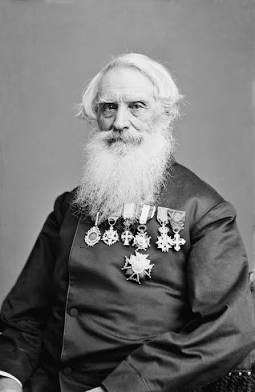
His pivot from art to invention was fueled by a profound personal tragedy that highlighted the desperate need for faster communication.
A Tragic Motivation
In 1825, Morse was in Washington, D.C., painting a portrait of the Marquis de Lafayette when he received a letter via horse messenger stating that his wife, Lucretia, was ill. The very next day, another letter arrived informing him she had died. Because communication at the time was limited to the speed of physical travel, by the time Morse made the multi-day journey back to his home in New Haven, Connecticut, his wife had already been buried.
Heartbroken by the fact that he was unaware of his wife’s failing health for days, Morse became obsessed with finding a method of instantaneous communication.
The Inventions
While the concept of using electricity to send signals had been explored in Europe, previous systems required multiple wires (sometimes up to 26), making them expensive and impractical over long distances. Morse’s breakthroughs included:
- The Single-Wire Telegraph: Morse designed a system using just one wire and a ground return. An electrical pulse sent by the transmitter would trigger an electromagnet at the receiving end, which pulled down a metal arm to emboss or mark a paper tape.
- Morse Code: To translate these electrical pulses into language, Morse and his colleague Alfred Vail created a cipher. They assigned combinations of short pulses (dots) and long pulses (dashes) to letters and numbers. Vail brilliantly optimized the code by assigning the shortest sequences to the most frequently used letters (like ‘E’ and ‘T’) to speed up transmission.
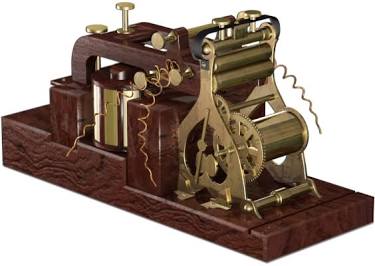
Try Morse Code!
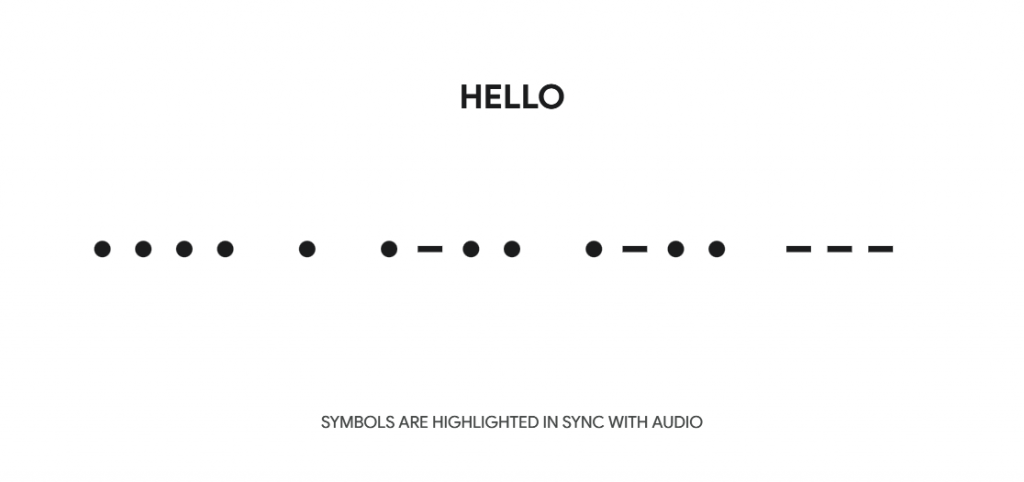
The dots are short beeps and the lines are long beeps. Bop Bop Bop Bop is H and Bop is E and Bop beep Bop Bop is L, Bop Beep Bop Bop is L, and last is Beep Beep Beep is O spelling Hello! Try it with your mouth!
Key Milestones
- The Concept
1832
While sailing back from studying art in Europe, Morse overheard a conversation about electromagnets and sketched out his initial idea for an electric telegraph. - First Working Model
1835
Using old canvas stretchers, a homemade battery, and an old clock, Morse built his first crude working model. - The Patent
1840
After several years of refinement and securing priority, Morse was officially granted a U.S. patent for his single-wire telegraph system. - The First Message
May 24, 1844
Backed by a $30,000 grant from Congress, Morse transmitted the first official message—”What hath God wrought”—from the U.S. Capitol to a railway station in Baltimore, Maryland, proving the system’s viability.